
First Half 1X2 Betting: Complete Guide
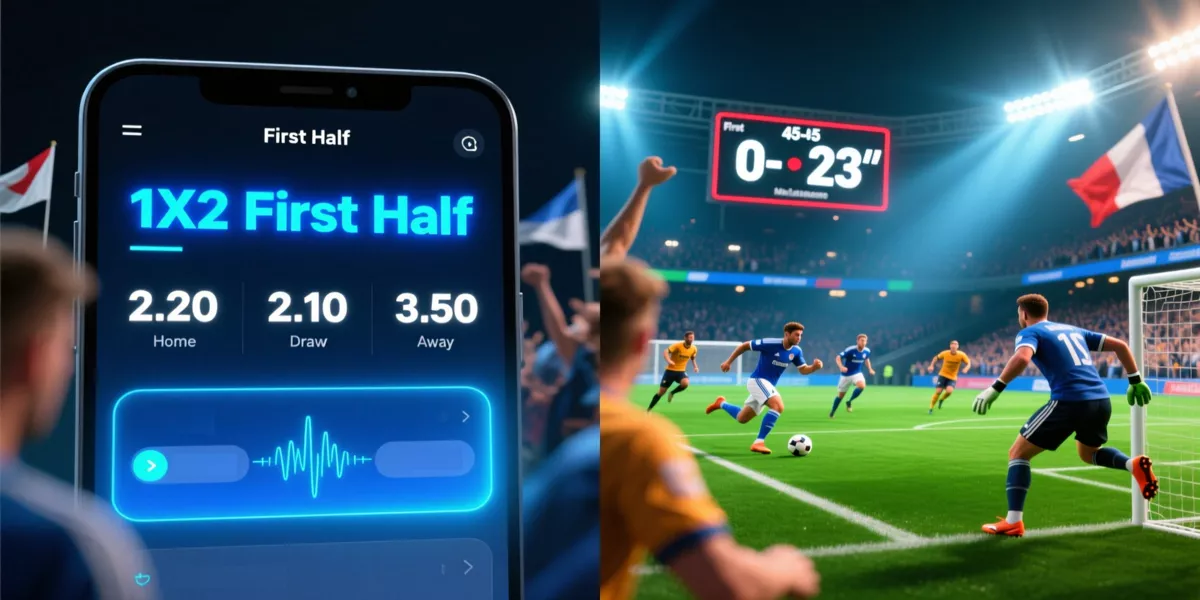
The match kicks off. You’re watching the opening exchanges, and within twenty minutes you can already tell how this game will play. One team dominates possession but can’t break through. The other sits deep, defending compact, looking for counters. You know how the first half ends before it actually ends. But did you bet on it?
First half 1X2 betting remains weirdly underutilized despite offering better value than full-time markets in specific situations. Most bettors ignore it completely, treating halftime as just an intermission rather than a standalone betting opportunity. That’s their loss. The teams that consistently start fast, the defensive sides that always keep it tight early, the patterns that repeat every single week, they all create exploitable edges in first half markets that don’t exist in full-time betting.
This isn’t about betting more markets for the sake of action. It’s about recognizing that the first 45 minutes follow different dynamics than the complete 90, and those differences create value when you know where to look.
Make sure you first understand the foundations by reading about how 1×2 odds are calculated.
- Why First Half Markets Behave Differently
- Identifying Fast Starters and Slow Starters
- First Half Draw Strategies
- Home Win First Half Betting
- Away Win First Half Value
- Live First Half Betting Strategies
- Statistical Indicators and Data Analysis
- Bankroll Management for First Half Betting
- Common First Half Betting Mistakes
Why First Half Markets Behave Differently
The opening period of football matches operates under distinct tactical and psychological constraints that don’t apply to full matches. Understanding these differences separates profitable first half betting from random guessing.
Teams approach the first half more cautiously, especially away sides. Nobody wants to concede early and spend 70 minutes chasing the game. Managers emphasize shape, discipline, and feeling out the opponent before committing numbers forward. This conservative mentality produces more draws and fewer goals than you see across full matches.
Statistical analysis shows first half draws occur in roughly 45-48% of matches across major European leagues. That’s dramatically higher than the 25-30% draw frequency for full-time results. Yet bookmakers price first half draws around 2.10-2.30 odds, implying only 43-48% probability. The market underprices draws systematically because bettors naturally gravitate toward backing winners even when draws represent the most likely outcome.
Goal timing patterns reveal another key difference. Approximately 55-60% of goals come in the second half across most leagues. Teams score more after the break because fatigue opens defenses, losing sides abandon caution, and the psychological pressure of time running out forces risk-taking. The first half sees fewer goals but more controlled, tactical football.
Substitutions matter less in first half betting because you’re working with starting lineups. The unpredictability of how substitutes impact matches doesn’t factor in. You analyze 22 players who will definitely play those 45 minutes rather than guessing which reserves might change dynamics after the hour mark.
Weather and pitch conditions affect first halves disproportionately. Heavy rain impacts the match from kickoff, but by the second half players adapt to conditions. Strong crosswinds disrupt early passing rhythms until teams adjust tactics. Fresh, firm pitches at kickoff deteriorate throughout matches, changing playing conditions. The first half captures these environmental factors at maximum impact.
Home advantage shows up stronger in first half results than full-time outcomes. The crowd energy peaks early, creating intensity and pressure that home teams leverage better at the start. By the 70th minute, crowd impact diminishes as noise levels drop and fans get anxious. First half betting amplifies home advantage while full-time betting dilutes it.
These structural differences mean you can’t simply apply full-time analysis to first half markets. The tactical dynamics, scoring patterns, and probability distributions all shift enough that first half betting requires its own analytical framework.
Identifying Fast Starters and Slow Starters
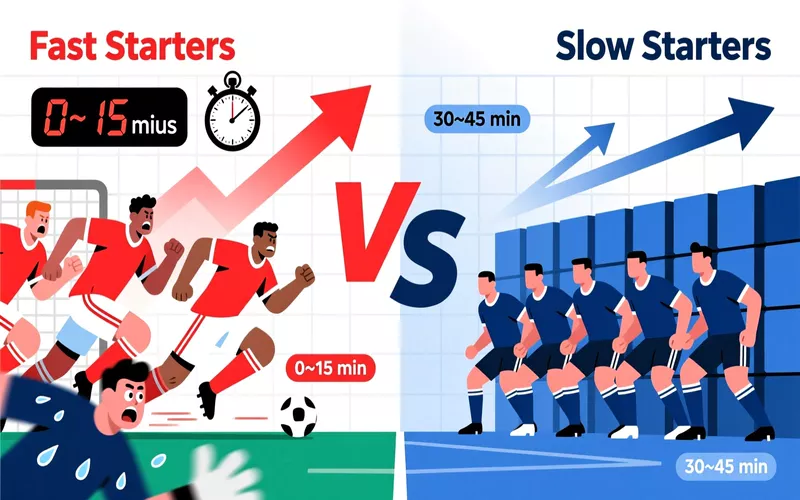
Team-specific tendencies around first half performance create the most reliable edges in these markets. Some teams consistently dominate early, others sleepwalk through opening periods before waking up after halftime.
Fast starters score early and often in the first 30 minutes. These teams play high-intensity pressing football that overwhelms opponents before they settle into defensive shape. Liverpool under Klopp exemplified this approach, suffocating opponents early and often leading at the break even in matches they eventually drew or lost.
Track first half goals scored and conceded over the last 20 matches for every team you bet on. Teams scoring 0.8+ goals per first half demonstrate genuine fast-starting ability. Teams allowing 0.6+ first half goals show vulnerability to early pressure. When fast starters face slow starters, the first half home win odds often underestimate the probability because the market prices full-match quality rather than early-match dynamics.
Slow starters need time to impose their quality. They might dominate matches eventually but rarely lead at halftime. These teams play possession-based football that requires patience to break down opponents, or they lack the intensity for high-tempo pressing early. Manchester City under Guardiola sometimes showed this pattern, controlling matches from the start but only converting dominance into goals after halftime adjustments.
Identifying slow starters creates value in first half draw betting. When two slow starters meet, that 2.20 first half draw becomes hugely attractive because both teams likely play cautiously for 45 minutes before one eventually asserts control. The bookmaker prices based on full-time win probabilities that don’t reflect early-match caution.
The psychological element matters too. Teams chasing Champions League qualification or fighting relegation approach matches differently than mid-table sides with nothing to play for. Desperate teams start aggressively, creating first half goals and defining results early. Comfortable teams play risk-averse football, keeping matches tight until forced to change approach.
Home teams generally start faster than away teams regardless of overall quality. The crowd support and familiar surroundings generate energy and confidence that translates to early pressure. Away teams need time settling into hostile environments before playing their natural game. This home-away split in first half performance exceeds the split you see in full-time results.
Youth and fitness levels impact first half performance significantly. Younger squads with better conditioning maintain intensity throughout matches. Older squads conserve energy early, relying on experience and tactical discipline until they can exploit tired opponents late. When young, fit teams face older sides, first half outcomes favor the energetic team even when full-match quality suggests evening results.
First Half Draw Strategies
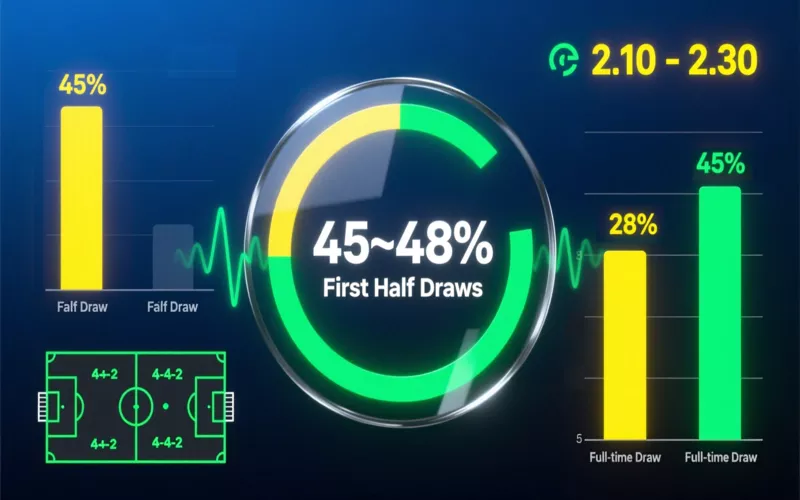
The first half draw represents the single most valuable outcome in these markets when identified correctly. The combination of high actual frequency and underpriced odds creates systematic opportunities.
Look for matches between defensively solid teams with low-scoring tendencies. Two sides averaging under 1.0 goals per match and fewer than 0.6 first half goals scored produce first half draws roughly 55-60% of the time. The market prices these draws around 2.10, implying 47.6% probability. That gap between reality and pricing compounds over dozens of bets.
Tactical matchups where both managers prioritize defensive organization over attacking intent generate first half draws predictably. When two counter-attacking teams meet, neither commits numbers forward early, both stay compact defensively, and the half often ends 0-0 regardless of full-time winner. The Serie A provides numerous examples where tactical conservatism produces first half stalemates.
Weather conditions dramatically shift first half draw probability upward. Heavy rain makes attacking football difficult and defending easier. Teams struggle creating quality chances in poor conditions, shots skid off wet surfaces, and defenders clear danger more easily. Wind disrupts passing accuracy and set pieces, reducing scoring efficiency. Cold temperatures impact ball control and movement quality early before players warm up properly.
Derby matches and local rivalries often produce cagey first halves despite the intensity. The psychological pressure of not wanting to concede early to hated rivals creates tactical caution. Teams feel out their opponents carefully rather than committing fully to attack. Many famous rivalries show statistical tendencies toward first half draws even when the full-time results vary widely.
Matches where both teams need wins rather than draws paradoxically produce first half draws more often. The fear of conceding first to an opponent also desperate for points creates unusual caution. Neither side wants to gamble early when the stakes are so high. They probe carefully, keep shape, and only open up after halftime when desperation overrides caution.
The critical mistake bettors make with first half draws: backing them based on “these teams always draw” reasoning without understanding why. Random past draw results don’t predict future draws. You need specific reasons why this particular first half will end level. Defensive strength, tactical approach, match stakes, weather conditions, team tendencies, these factors matter. Historical coincidence doesn’t.
Home Win First Half Betting
Strong home teams facing weak away opposition represent the clearest first half home win opportunities. The combination of quality gap, crowd support, and away team caution creates early goals and halftime leads.
Teams with dominant home records scoring 1.5+ first half goals per home match demonstrate the pattern you want to exploit. When they host away sides averaging 1.0+ first half goals conceded on the road, the quality differential manifests early. The first half home win odds often sit around 2.20-2.50 in these matchups despite occurring 50-55% of the time based on the underlying tendencies.
Fast-starting home teams create even better opportunities when facing slow-starting away sides. The tactical clash produces lopsided first halves where the home team dominates territorially and usually leads at the break. These matches might end close on full-time scores, but the first 45 minutes belong to the home side consistently.
Cup competitions where home lower-tier sides host superior opposition with rotation create unexpected first half home value. The underdog plays their strongest lineup with maximum intensity for 45 minutes before fitness and quality gaps emerge. The favorite rotates and treats the first half casually, only asserting dominance after halftime. First half betting allows you to back the underdog during their window of competitive viability.
Early kickoff times favor home teams disproportionately in first half markets. The 12:30 weekend kickoff finds away teams less prepared mentally and physically after traveling morning-of. Home teams train at the stadium, sleep in their own beds, and arrive sharp. The first half often tilts home before away sides properly wake up, even when full-time results stay competitive.
Teams with specific tactical instructions to score early pressure opponents effectively in first halves. Some managers explicitly demand fast starts, pressing high and attacking from the opening whistle. These tactical approaches produce first half leads regularly even against quality opposition. Identifying these managerial tendencies through watching matches and reading tactical analysis helps spot first half home win value.
The major pitfall in first half home betting: assuming home favorites always start fast. Many strong home teams actually start slowly, feeling out opponents before asserting control. You need evidence of genuine fast-starting tendency, not just overall home strength. Track actual first half results over 15-20 matches before concluding a team consistently leads at the break.
Away Win First Half Value
First half away wins occur less frequently than home wins or draws, making the odds attractive when you identify legitimate opportunities. The key involves finding away teams that consistently score early against home sides vulnerable to fast starts.
Elite away teams visiting mid-table or struggling opposition sometimes offer first half away win value despite being heavy full-time favorites. The bookmaker prices based on full-match dominance expectations, but the away team often establishes control early, scoring first and leading at halftime before eventually winning comfortably. The first half away win at 3.50-4.50 odds might represent better value than the full-time away win at 1.40 because you capture the same likely outcome at far better prices.
Counter-attacking away teams create first half goal opportunities efficiently against home sides that commit numbers forward. When possession-heavy home teams face fast-breaking away sides, the home team often dominates territorially without scoring while the away team converts one or two counters. The first half can end with an away lead despite territorial disadvantage. These tactical matchups produce first half away value that disappears in full-time markets.
Away teams on strong runs of form entering matches against home sides in poor form occasionally offer first half away prices that don’t reflect the momentum and confidence differential. Market perception lags recent form shifts, especially in first half markets with less betting volume. The away team starts aggressively, imposing their quality early before the home crowd factor becomes relevant.
Specific managers and team styles prioritize fast starts regardless of home or away status. These teams attack from the opening whistle, press high, and seek early goals whether playing home or away. When they visit passive home sides that sit back, the first half often belongs to the away team despite playing on the road. Identifying these managerial philosophies through tactical analysis creates edges in first half away betting.
The challenge with first half away bets: the infrequency of occurrence demands significant edge to justify the action. First half away wins happen in only 22-25% of matches across major leagues. You need genuine conviction based on specific tactical or form-based reasons rather than vague “they might score early” hopes. The higher odds tempt lazy analysis, but these bets require the most rigorous preparation.
Live First Half Betting Strategies
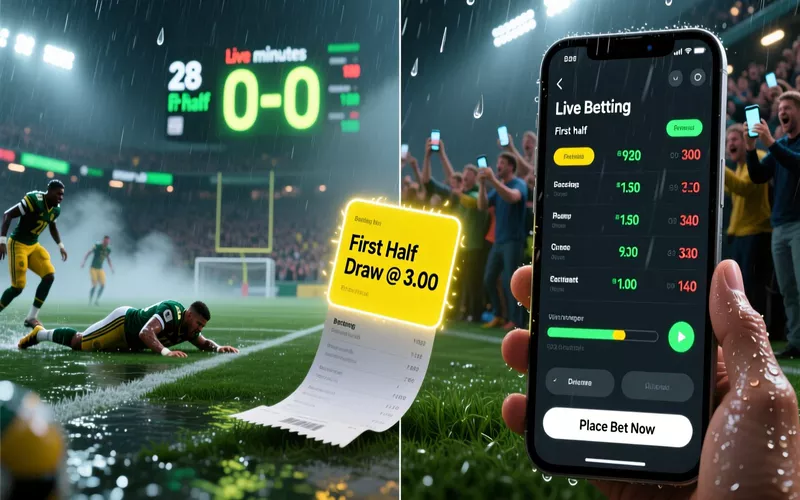
In-play betting during the first half creates additional opportunities beyond pre-match positions. The first 20-30 minutes often clarify how the half will end, allowing sharp bettors to capitalize on overreactions or momentum shifts.
Early goal situations shift first half odds dramatically, often overcompensating for how much probability actually changed. Home team scores in the 12th minute, their first half win odds crash from 2.20 to 1.30. But has the probability really moved that dramatically? If the underlying match dynamics suggest the home team was dominating anyway and likely to score, that early goal just confirmed expectations rather than fundamentally changing probabilities. The away team or draw at inflated odds might represent value.
Teams dominating possession and chances without scoring create first half draw value in-play. Match reaches 30 minutes with the home team outshooting the away side 8-2 but still 0-0. The first half draw odds drift from 2.10 to 3.00+ because bettors assume the dominance must produce goals eventually. But scoring within 15 minutes after failing for 30 minutes isn’t as likely as the odds movement suggests. The draw offers value despite territorial disadvantage.
Weather deterioration during the first half creates opportunities in markets that priced for the kickoff conditions. Match starts dry, heavy rain begins at the 20-minute mark with score 0-0. The first half draw odds should shorten significantly because goals become less likely in poor conditions, but the market adjusts slowly. Quick bettors backing draws capture value before odds correct.
Injury situations changing team dynamics affect first half outcomes but market reaction sometimes overshoots. Star striker leaves injured at 25 minutes with home team leading 1-0. The first half home win odds blow out from 1.60 to 2.20 assuming the injury catastrophically impacts the remaining 20 minutes. But how often does one injury in the final third of a half completely flip a 1-0 lead? The overreaction creates value staying with the home team.
Red card situations before halftime produce massive odds movements that occasionally overshoot true probability changes. Home team gets player sent off at 38 minutes while leading 1-0. First half betting market panics, assuming the red card somehow matters for the remaining seven minutes plus stoppage time despite the home team sitting deep to protect their lead anyway. The first half home win odds explode despite the match situation making it still the most likely outcome.
The discipline required for successful live first half betting involves watching matches critically rather than emotionally, identifying overreactions rather than getting swept up in them, and acting quickly when value appears before markets correct. Most bettors do the opposite, making impulsive emotional bets based on recent events rather than calculating how those events actually shift probabilities.
Statistical Indicators and Data Analysis
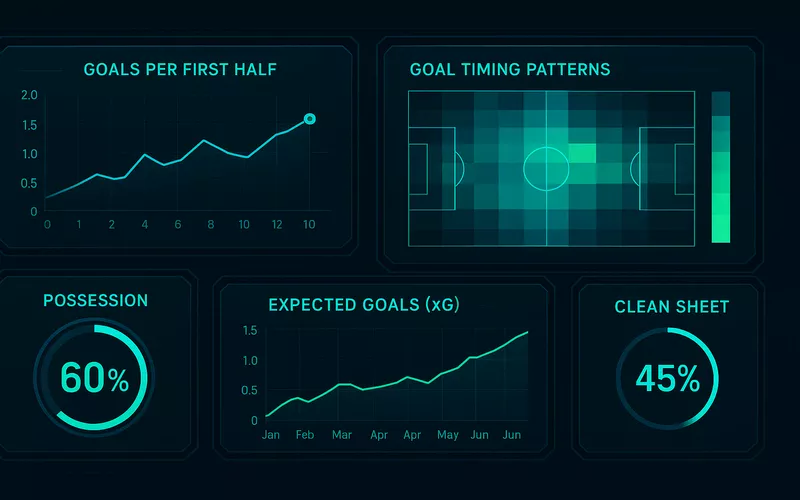
Profitable first half betting requires tracking specific metrics that predict first half outcomes more accurately than overall match statistics.
First half goals per match averages reveal team tendencies cleanly. Teams averaging 0.8+ first half goals demonstrate consistent fast-starting ability. Teams averaging 0.3 or fewer lack early attacking threat regardless of full-match quality. Calculate these averages separately for home and away matches because the splits often diverge significantly.
First half goals conceded per match identifies defensive vulnerability or strength in opening periods. Teams allowing 0.7+ first half goals struggle defensively early, creating opportunities for opponent first half wins. Teams allowing 0.3 or fewer demonstrate defensive solidity that produces first half draws frequently.
Percentage of total match goals scored in first half versus second half reveals whether teams front-load or back-load their attacking output. Teams scoring 55%+ of their goals before halftime show genuine fast-starting tendency. Teams scoring 40% or fewer first half goals qualify as slow starters who need time to break opponents down.
Time of first goal statistics indicate how quickly teams typically score. Teams whose first goal averages before the 25-minute mark attack immediately and aggressively. Teams whose first goal averages after the 35-minute mark need extended periods establishing control before converting dominance into goals.
Clean sheet percentage in first halves compared to full matches shows whether defensive strength persists throughout or weakens with fatigue. Teams keeping first half clean sheets 60%+ of the time demonstrate early defensive solidity creating first half draw or low-scoring opportunities.
Possession statistics for first halves reveal territorial control patterns. Teams averaging 60%+ first half possession dominate early but might not convert control into goals immediately. Teams averaging 40% or less first half possession sit deep defensively, making draws likely unless they convert counters efficiently.
Expected goals data specifically for first halves provides objective measure of chance quality created and allowed. Teams consistently outperforming their first half xG ride luck that will regress. Teams underperforming first half xG deserve backing because the goals will eventually match the underlying chance creation.
The critical insight from all these statistics: first half performance often differs substantially from full-match performance, and those differences create exploitable patterns when you track the right metrics.
Bankroll Management for First Half Betting
First half betting requires adjusted bankroll management compared to full-time betting because the shorter time window and different dynamics affect variance patterns.
Treat first half bets as separate category from full-time bets when tracking performance. Calculate ROI independently because you might show edge in one market while losing money in the other. Many bettors discover they profit in first half markets while struggling with full-time betting, or vice versa. You can’t optimize what you don’t measure separately.
Consider smaller unit sizes for first half betting relative to full-time action because the compressed 45-minute window creates more volatility. A full match allows 90 minutes for your thesis to play out, creating mean reversion opportunities when early events go against you. First half betting offers no such buffer. If you’re wrong about the opening dynamics, you’re simply wrong with no time for correction.
The standard flat betting approach still works best overall. Define one unit as 1-2% of your total betting bankroll, use that unit size consistently across first half bets regardless of perceived confidence level. The temptation to bet more heavily on “sure thing” first half bets destroys many bettors who underestimate how much variance exists even in favorable situations.
Avoid combining first half and full-time bets in accumulators unless you’ve done the correlation analysis. Some bettors assume first half and full-time results are independent, but they obviously correlate significantly. A team winning the first half typically wins the full match at elevated rates. This correlation reduces the effective odds of your accumulator compared to truly independent events.
Track your performance across different first half bet types. Calculate separate ROI for first half home wins, draws, and away wins. You might discover strong edges in first half draws while showing no edge in first half home wins. Knowing your strengths allows you to focus action where you demonstrate actual profitability rather than betting all three outcomes equally.
Build sufficient sample sizes before drawing conclusions about whether first half betting works for you. Variance over 50 bets means nothing. You need 200+ first half bets to establish whether you possess genuine edge or just experienced temporary variance. Most bettors quit winning strategies too early or persist with losing strategies too long because they don’t gather statistically significant sample sizes.
Common First Half Betting Mistakes
Even experienced bettors fall into specific traps when betting first half markets that they avoid in full-match betting.
Assuming full-match favorites always lead at halftime represents the most common error. Strong teams don’t necessarily start fast. Many elite sides play patient possession football that requires 60-70 minutes breaking down organized defenses. Betting first half wins on quality alone without confirming fast-starting tendency guarantees long-term losses.
Ignoring weather and pitch conditions impacts first half betting more than full-time betting because teams don’t adapt yet. That heavy rain starting at kickoff affects the entire first half, while in full-match betting teams adjust tactics at halftime to compensate. First half bettors must factor environmental conditions more heavily into their analysis.
Chasing losses through live first half betting destroys bankrolls rapidly. You lose a pre-match first half bet, immediately look for live first half opportunities in other matches to recover. That desperation breeds poor decision-making and compounds losses. Each first half bet must stand independently on its analytical merit regardless of previous results.
Betting first half draws on every low-scoring match without distinguishing between defensive strength and offensive weakness. Two teams might each average 0.8 goals per match, but if that’s because both have terrible attacks rather than strong defenses, they’re more likely to produce low-quality chances throughout rather than organized defensive stalemates. First half draws require specifically defensive solidity, not just low scoring.
Overweighting recent first half results without sufficient sample size. A team leads at halftime three straight matches, suddenly bettors assume they’re fast starters worth backing every week. Three data points mean nothing. You need 15-20 first half results minimum before identifying genuine patterns versus random clustering.
Failing to adjust for opponent quality when evaluating first half tendencies. A team might score 0.9 first half goals per match overall, but that average includes matches against terrible opposition. Against quality defensive teams, their first half output drops to 0.3 goals. Context matters more than raw averages.
The path to profitable first half betting requires acknowledging these common mistakes then building systems that minimize their occurrence through proper analysis, discipline, and tracking. Most bettors never succeed in first half markets not because the opportunities don’t exist but because they approach these markets with the same lazy analysis they use for full-time betting.
Get early game analysis on our betting homepage.
Expertly verified: Amelia Foster