
1X2 Bet: The Complete Guide to Three-Way Betting
You’re staring at a betting slip. Three options. Three numbers that somehow predict the chaos of 90 minutes of football. Home win, draw, away win. Simple, right? Then why does everyone seem to overcomplicate it?

Here’s the thing about 1X2 betting that nobody tells beginners: it’s simultaneously the easiest and most misunderstood market in sports wagering. Ask ten bettors what makes a good 1X2 bet, and you’ll get ten different answers. Some swear by backing favorites. Others hunt for draw value like treasure hunters. A few chase underdogs with religious fervor.
The reality sits somewhere in between all that noise.
1X2 betting represents the foundation of sports betting. It’s been around since bookmakers first started taking wagers on football matches, and it remains the most popular market today. You’re essentially predicting the full-time result of a match: will the home team win, will it end level, or will the away team triumph? That’s it. No spreads to calculate. No complex formulas. Just three outcomes and your judgment.
But simple doesn’t mean easy. Anyone can pick a team to win. The difference between casual bettors and profitable ones comes down to understanding the mechanics behind those three numbers on your screen. How bookmakers price each outcome. When draw odds actually represent value. Why backing favorites at 1.30 odds is often a terrible idea even when they win 70% of the time.
This guide breaks down everything you need to know about 1X2 betting. We’re covering the basics that somehow confuse people, the strategies that actually work, and the mistakes that drain bankrolls faster than you can say “late equalizer.” Whether you’re placing your first bet or looking to sharpen your approach, you’ll walk away understanding why 1X2 remains the backbone of football betting.
No fluff. No generic advice you’ve read a dozen times. Just the practical knowledge that separates winning bettors from everyone else.
Table of Contents
What Is 1X2 Betting?
The name looks like someone fell asleep on a keyboard, but there’s logic buried in those characters. 1X2 betting, also called three-way betting or match result betting, lets you wager on one of three possible outcomes in a sporting event.
The “1” represents a home team victory. Not a draw where they edge it on penalties. Not a scrappy win after extra time. Just a straightforward home win when the final whistle blows.
The “X” stands for a draw. Both teams level at full time. Could be 0-0, could be 3-3. Doesn’t matter. Equal scores mean the draw wins.
The “2” indicates an away team triumph. The visiting side walks away with all three points.
This format emerged from European betting markets, particularly in football where draws happen frequently enough to matter. American sports betting traditionally focused on two-way moneylines because leagues like the NBA and NFL almost never end in ties. But football? Roughly 25-30% of matches end level depending on the league. You can’t just ignore that outcome.
Different bookmakers call this market by different names, which creates unnecessary confusion. You might see “Match Result” at one site, “Full Time Result” at another, “Three-Way Bet” somewhere else, or the classic “1X2” that started this whole conversation. They all mean the same thing. Three outcomes, pick one, hope you’re right.
The critical detail everyone overlooks: your bet settles based on the score after 90 minutes plus injury time. Nothing beyond that counts. If Manchester United and Liverpool draw 2-2 at full time but United wins 3-2 after extra time, the draw still wins your 1X2 bet. Extra time, penalty shootouts, golden goals in hockey, none of that matters for settlement purposes. Regular time only.
This trips up new bettors constantly. They watch their team win in extra time and expect to get paid on their 1X2 home win bet, then complain when the bookmaker settles it as a loss. The rules are clear, but people don’t read them until after losing money.
The format works brilliantly for low-scoring sports where draws represent realistic outcomes. Football fits perfectly. So does ice hockey in leagues that allow regular-time ties. Rugby occasionally. Handball in tight matches. Basketball in some European leagues where overtime isn’t guaranteed.
But you won’t find 1X2 betting on NBA games, because they play until someone wins. Same with tennis, baseball, American football. No draw possibility means no third option means no 1X2 market. Bookmakers offer two-way moneylines instead.
Understanding this basic framework matters more than most betting tips you’ll read. The three outcomes aren’t equally likely. Home teams win more often than away teams across almost every league. Draws cluster in that middle range of probability. Your job as a bettor involves identifying when the odds attached to each outcome accurately reflect reality, and when they don’t.
That gap between true probability and bookmaker odds? That’s where profit lives. But you can’t spot it without understanding what you’re actually betting on in the first place.
How 1X2 Betting Works
Let’s walk through an actual bet because theory without practice teaches nothing. Say Liverpool hosts Manchester City at Anfield. You open your bookmaker’s site and see these 1X2 odds:
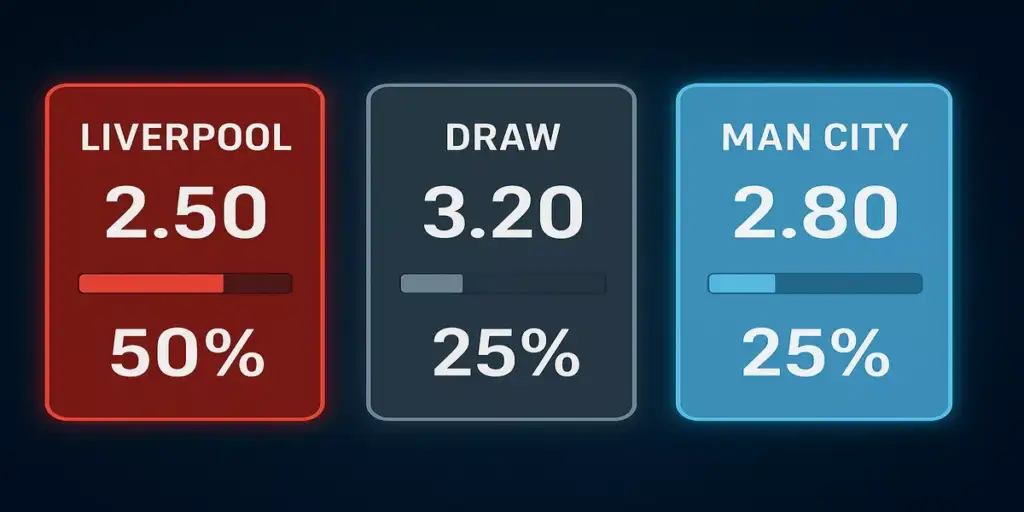
Liverpool (1): 2.50 Draw (X): 3.20
Manchester City (2): 2.80
Those decimal numbers represent your potential return for every unit you stake. Bet $100 on Liverpool at 2.50, and a win pays you $250 total, which includes your original stake back. Your profit is $150.
The math works identically for all three outcomes. Back the draw at 3.20 with $100, and you’re looking at $320 total return if it finishes level. That’s $220 profit. Away win at 2.80 gives you $280 back, so $180 profit.
Simple multiplication, but the implications run deeper. Those odds tell a story about how the bookmaker views this match. Lower odds indicate higher probability. Liverpool at 2.50 makes them slight favorites. City at 2.80 aren’t far behind. The draw at 3.20 sits as the least likely outcome according to the market.
Converting Odds to Probability
You can reverse engineer these odds into implied probabilities. The formula: divide 1 by the decimal odds. Liverpool at 2.50 converts to 1/2.50 = 0.40, or 40% probability. The draw at 3.20 becomes 31.25% probability. City at 2.80 equals roughly 35.7% probability.
Add those up and you get 107%. Wait, that doesn’t work. Probabilities should total 100%. That extra 7% represents the bookmaker’s margin, their built-in profit. They adjust the odds slightly in their favor across all three outcomes. This overround ensures they make money regardless of the result, assuming balanced action on all sides.
Every bookmaker operates with this margin. Some keep it tight at 5-6% for competitive markets. Others push it to 8-10% on lower-profile matches. Shopping around for the best odds literally puts more money in your pocket when you win.
The betting process itself couldn’t be simpler. You log into your account, navigate to the match, click your chosen outcome, enter your stake, confirm the bet. Done. The slip locks in your odds at that moment. If the odds change before kickoff, tough luck, you’re stuck with what you clicked. This actually protects you when odds drift in the wrong direction, but it stings when they improve after you’ve already bet.
Most bookmakers offer cash-out options now, letting you settle your bet early for a guaranteed amount based on current match circumstances. Liverpool goes up 1-0 after 20 minutes? That home win bet you placed at 2.50 might now offer a cash-out at 1.30, giving you a smaller profit but removing all risk. Whether to cash out involves more psychological torture than most people expect.
Bets settle within minutes after the final whistle. Win, and the money hits your account immediately. Lose, and it vanishes like it was never there. Draw when you backed a win? Same result, stake gone.
The timing matters because some bettors compound winnings across multiple matches. That strategy requires winning the first bet to fund the second. Settlements need to process quickly or the opportunity disappears.
Understanding settlement rules prevents most disputes. If a match gets abandoned before 90 minutes complete, most bookmakers void all bets and refund stakes. If it finishes but gets awarded to one team later due to crowd trouble or whatever, the on-field result usually stands for betting purposes. Always check the specific rules at your bookmaker, because variations exist.
Placing the bet takes 30 seconds. Understanding whether it’s worth placing requires considerably more effort.
1X2 Odds Explained
Odds aren’t random numbers plucked from thin air. They represent a bookmaker’s assessment of probability, filtered through their margin, adjusted by market forces, and occasionally manipulated by sharp money moving lines.
Start with the core concept: odds convert directly to implied probability. You’ve already seen this formula, but it matters enough to repeat. Take any decimal odd, divide 1 by that number, multiply by 100 for percentage. Odds of 3.00 equal exactly 33.33% probability. Odds of 2.00 equal 50%. Odds of 1.50 equal 66.67%.
This mathematical relationship governs everything in betting. When you see odds of 4.50 on an underdog, the bookmaker believes that outcome happens roughly 22% of the time. Whether they’re correct is a different question entirely.
The bookmaker margin complicates this clean math. Remember that Liverpool vs City example? The probabilities added up to 107% instead of 100%. That 7% overround gets distributed across all three outcomes, typically weighted heavier on favorites and lighter on longshots.
Margins vary wildly between bookmakers and between markets. Sharp books serving professional bettors might operate on 3-4% margins for Premier League matches, knowing they’ll attract huge volume. Recreational books aimed at casual punters push margins to 8-10% because their customers don’t comparison shop. Lower-tier leagues often carry even higher margins because fewer people bet them, reducing competition.
Calculating Fair Odds
You can actually calculate the fair odds without margin. Take that Liverpool-City match. Add up all three probabilities (40% + 31.25% + 35.7% = 107%). Divide each probability by 1.07 to remove the margin. Liverpool’s true probability becomes 37.4%, which converts to odds of 2.67. The draw becomes 29.2%, or 3.42 odds. City becomes 33.4%, or 2.99 odds.
Those fair odds tell you what the outcomes should pay without the bookmaker taking a cut. Compare them to the actual odds offered, and you can identify value. If you find Liverpool at 2.70 somewhere when fair odds are 2.67, that’s a marginally good bet. If you find them at 2.80, that’s a genuinely valuable opportunity.
This is where most bettors fail. They look at odds of 1.50 and think “good chance of winning” instead of understanding that 1.50 odds need to win 67% of the time just to break even. You don’t win money hitting 65% of your 1.50 bets. You lose it slowly.
Lower odds mean higher implied probability but smaller returns. Back enough favorites at 1.30-1.40 and you’ll win most bets, sure. But the few losses wipe out several wins worth of profit. One loss at 1.30 odds costs you roughly three wins to recover. The math doesn’t care about your confidence or feelings.
Reading odds formats across regions adds another layer of confusion. Americans see +150 or -200 instead of decimal odds. The British prefer fractional odds like 5/2 or 11/4. Europeans and Australians stick with decimals. They all describe the same thing in different languages.
Converting between formats: American odds with a minus sign (-200) convert to decimal by calculating (100/200) + 1 = 1.50. Plus sign (+150) converts by (150/100) + 1 = 2.50. Fractional 5/2 converts by dividing (5/2) + 1 = 3.50.
Odds move constantly based on betting action. Heavy money on one outcome forces the bookmaker to lower those odds and raise the opposite outcomes to balance their risk. Sharp bettors hammering Liverpool at 2.60 might drop them to 2.45 within an hour. That movement tells you something about where informed money believes value exists.
Sometimes odds move without significant money flow. A key player injury news breaks, odds shift immediately. Team lineup leaks an hour before kickoff, odds adjust. Weather forecast changes, odds respond. The market reacts faster than most bettors can process information.
Understanding all this transforms odds from mere numbers into a language describing probability, value, market sentiment, and opportunity. You either learn to read that language fluently or you keep making bets that look good but lose money over time.
Types of 1X2 Bets
Full Time 1X2 remains the foundation. Predict the result after 90 minutes plus stoppage time, everything else is noise. This market dominates betting volume because it’s straightforward and available on virtually every match bookmakers offer. You’ll find full-time 1X2 odds on Premier League blockbusters and obscure Moldovan second division fixtures alike.
The simplicity makes it dangerous for undisciplined bettors. Easy access breeds careless decisions. Just because you can bet on a random Tuesday night match in South Korea doesn’t mean you should.
First Half 1X2
First Half 1X2 isolates the opening 45 minutes. Whatever happens after halftime becomes completely irrelevant. Liverpool leads 2-0 at the break but draws 2-2 by full time? Your first-half home win bet still wins. City trails 0-1 at halftime but wins 3-1 overall? Your first-half away win bet loses.
This market offers different odds than full-time because scoring patterns change throughout matches. Teams tend toward caution early, especially away sides. First-half draws happen more frequently than full-time draws in most leagues. Goals concentrate in the second half when fatigue opens defenses and losing teams abandon caution.
You can exploit these patterns once you understand them. Some teams consistently start matches strongly. Others play conservatively for 30 minutes then open up. The first-half market lets you bet on these tendencies without caring about late-match chaos.
Second Half 1X2
Second Half 1X2 works identically but focuses on minutes 46-90. The first-half score means nothing to your bet. Match is 0-0 at halftime and City scores twice in the second half? Your second-half away win bet wins. Match is already 3-0 Liverpool at the break, stays 3-0? Second half ends 0-0, so draw wins.
This market sees less action than first-half betting, probably because people lose interest once they’ve watched 45 minutes. But strategic opportunities exist. Trailing teams often dominate possession in the second half trying to equalize. Leading teams sometimes shut down and invite pressure. These dynamics create value if you’re paying attention.
One crucial rule applies to both half-time markets: the bet settles on that half-time period only. If the match gets abandoned during the second half, your second-half bet usually voids while your first-half bet already settled. Check your bookmaker’s specific rules, because variations exist.
1X2 with Handicap
1X2 with Handicap changes the entire dynamic. The bookmaker applies a virtual goal advantage or disadvantage to level the playing field between mismatched teams. Say Manchester City plays a League One side in the FA Cup. Straight 1X2 odds might look like City 1.15, Draw 8.00, Underdog 17.00. Nobody wants to back City at 1.15, that’s terrible value.
Add a -2 handicap to City, and suddenly the odds become City 2.40, Draw 3.60, Underdog 2.90. Now City needs to win by three or more goals for your home win bet to pay. If they win 2-0, the handicap makes it 0-0, so draw wins. If they win 1-0, the handicap makes it a 1-2 away win.
Handicaps work in reverse for underdogs too. Give the League One side a +2 handicap, and they effectively start 2-0 up. City wins 2-0 in reality, but with the handicap it’s 2-2, so draw wins. City must win by three clear goals to overcome the +2 handicap on their opponent.
These handicap markets exist mainly for lopsided matches where one team so heavily outclasses the other that regular 1X2 odds become pointless. You occasionally find them on competitive matches too, but less commonly.
The calculations require attention. Negative handicaps subtract from your team’s score. Positive handicaps add. Always work through the math before betting to understand exactly what result you need.
1X2 in Accumulators
1X2 in Accumulators combines multiple matches into one bet requiring all selections to win. Back Liverpool, City, and Arsenal all to win in separate matches at odds of 2.00, 1.80, and 2.20. Combined odds multiply: 2.00 x 1.80 x 2.20 = 7.92. A $100 stake returns $792 if all three win.
One loss kills the entire accumulator. Arsenal draws their match, your whole bet loses despite Liverpool and City both winning. This high-risk, high-reward approach appeals to bettors chasing big returns from small stakes. Bookmakers love accumulators because they dramatically favor the house.
The math turns brutal as you add selections. Hit 50% of individual bets and you’ll roughly break even over time. Hit 50% of four-team accumulators and you’re hemorrhaging money. Each additional selection multiplies the difficulty exponentially while the odds never quite compensate fairly.
Understanding these variations lets you match the right market to the right situation. Some bets work better in certain formats. Recognizing that distinction separates thoughtful bettors from people just clicking random options.
1X2 Betting Strategies
Winning at 1X2 betting requires more than picking teams you like. It demands systematic analysis, disciplined bankroll management, and the ability to identify value where others see only hope.
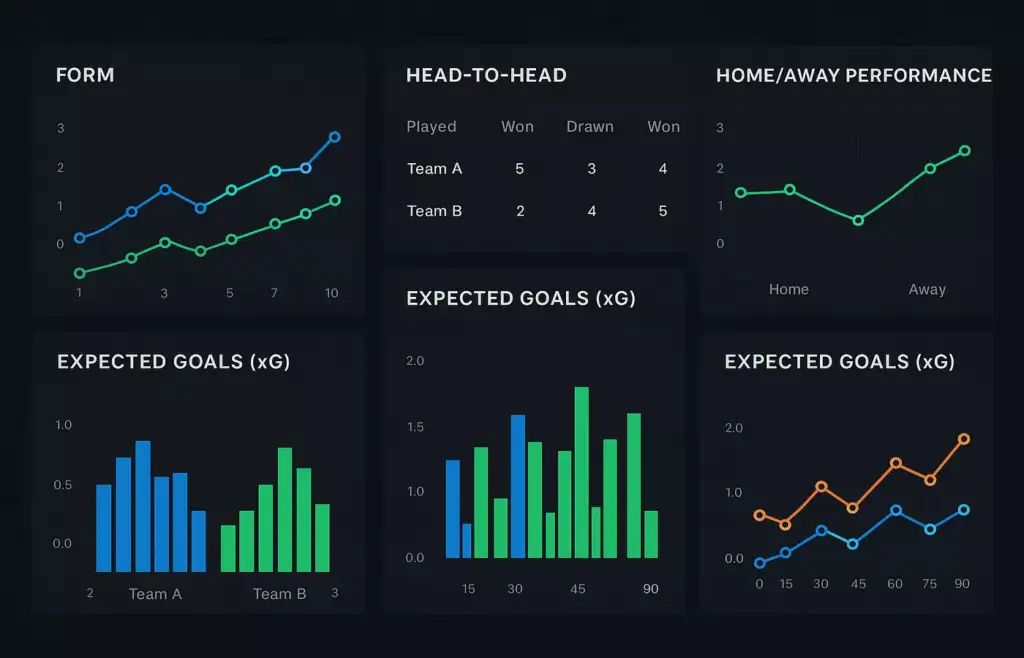
Start with fundamental team analysis because nothing else matters if you don’t understand the matchup. Look at each team’s last 5-10 matches, but don’t just count wins and losses. How did they win? Dominant performances or scrappy 1-0 results riding luck? How did they lose? Blown out or narrow defeats that could have gone either way?
Context matters more than results. A team losing 2-1 to Manchester City while creating five clear chances shows very different quality than a team losing 2-1 to Burnley while barely getting out of their own half. The scoreline looks identical, the underlying performance tells opposite stories.
- Head-to-Head Records
- Head-to-head records reveal patterns regular form analysis misses. Some teams consistently struggle against specific opponents despite overall good form. Liverpool dominated Manchester United for years regardless of their league positions. These psychological or tactical matchup advantages persist across seasons.
- Home and Away Form Splits
- Home and away form splits become critical in 1X2 betting because the home advantage isn’t uniform. Some teams transform at home, winning 70% of matches while barely scraping 30% away. Others travel well. Betting on a strong home team against a weak away side increases your edge substantially. Backing a weak home team against a strong away side does the opposite.
- Injuries and Suspensions
- Injuries and suspensions matter, but not equally. Losing your starting goalkeeper or best defender impacts your chances more than losing a backup midfielder. Losing a key striker who scores 50% of your goals changes everything. Track team news obsessively in the 48 hours before matches.
- Motivation Factors
- Motivation factors influence outcomes more than most bettors acknowledge. A relegation-threatened team playing for survival brings different intensity than a mid-table side with nothing to play for. Title contenders facing must-win matches approach games differently than teams already guaranteed Champions League qualification. Cup finals carry unique pressure that affects performance.
Weather and pitch conditions change the game literally. Heavy rain favors defenders and makes goals scarcer. Strong wind disrupts passing accuracy. Terrible pitch conditions reduce technical quality and increase randomness. These factors tilt probabilities enough to create value.
Statistical Analysis
Statistical analysis provides objective data that cuts through bias and narrative. Expected goals (xG) data shows you which teams create and allow high-quality chances versus which teams rely on luck. A team winning 1-0 every week despite being out-shot 20-5 probably isn’t as strong as their record suggests. A team losing 1-0 every week while dominating possession and chances might be undervalued by the market.
Shot conversion rates identify efficient finishers versus wasteful attackers. Two teams might create similar chances, but one converts 15% while the other converts 8%. That efficiency gap impacts results significantly.
Defensive records matter more than offensive records for predicting draws. Two strong defenses meeting often produces low-scoring draws. Two weak defenses creates goal-fests where leads change hands.
Goals scored and conceded patterns reveal tendencies. Teams that consistently score first and hold leads make good candidates for early in-play betting. Teams that concede first but frequently equalize might offer value in the draw market during matches.
Late goal trends after the 70th minute matter because so many results flip in final moments. More than 40% of goals happen in the last 20 minutes as fatigue and desperation open defenses. Betting pre-match on teams with strong late-goal records provides an edge.
Value Betting Strategy
Value betting strategy requires ruthless objectivity. You’re not betting on who you think will win. You’re betting when the odds overestimate the probability of one outcome relative to your assessment.
Say you believe Liverpool has a 45% chance of beating City. The odds are 2.50, implying 40% probability. That 5% gap represents value worth betting. Even if City wins this specific match, you win money over time by consistently identifying and betting these value spots.
Finding Overpriced Odds
Finding overpriced odds means calculating your own probabilities first, then comparing to bookmaker odds. Most bettors do this backwards, seeing odds first and then justifying bets. Discipline requires forming an opinion before looking at odds.
Underdog value exists more often than people think. Public money piles on favorites, driving their odds down and opponent odds up. Sharp bettors exploit this by backing inflated underdog prices when circumstances suggest closer matches than the market believes.
Draw value hides in plain sight. Draws hover around 3.00-3.50 odds frequently, implying 28-33% probability. But many matches between evenly-matched mid-table teams actually end level 35-40% of the time. That gap creates consistent value if you can stomach the volatility.
Bankroll Management
Bankroll management matters more than any betting strategy. You can pick 60% winners and still go broke with poor money management. You can pick 45% winners and make profit with disciplined staking.
The unit system works best. Define one unit as 1-2% of your total bankroll. Bet one unit on standard plays, never more than three units on your highest-confidence bets. This approach prevents any single loss from crippling your bankroll.
Flat betting removes emotion. Same stake every bet, regardless of confidence or recent results. It feels boring after a win streak when you want to press your advantage. It feels smart after a losing streak when increased stakes would accelerate your decline.
Never chase losses by increasing stakes. That path leads to ruin faster than bad handicapping ever could. Accept losses as the cost of doing business. Move on to the next bet with the same analytical process.
Record everything. Track every bet with date, match, selection, odds, stake, result, and profit/loss. After 100 bets, patterns emerge showing your strengths and weaknesses. Maybe you win backing favorites but lose backing draws. Maybe home teams profit you while away teams drain your bankroll. You can’t fix problems you don’t measure.
Live Betting Strategies
Live betting strategies open opportunities unavailable pre-match. Odds shift dramatically based on early goals, creating value in overreactions. Team goes down 1-0 in the 10th minute, their odds to win might blow out to 5.00 when the actual probability only dropped slightly. That’s value.
Half-time betting provides a reset point. You’ve watched 45 minutes, you understand the flow, and you can make informed decisions about the second half based on actual performance rather than pre-match predictions.
Hedging opportunities arise when your pre-match bet looks good but hasn’t settled. Backed Liverpool at 3.00 before kickoff, they lead 1-0 at 60 minutes, their odds drop to 1.40. You can bet City at higher odds now, guaranteeing profit regardless of the final result. Whether to hedge involves personal risk tolerance.
The common thread across all these strategies: discipline trumps cleverness. Smart analysis means nothing if you can’t follow through consistently. Emotional betting destroys bankrolls faster than poor judgment. Treat betting like business, not entertainment.
1X2 vs Other Betting Markets
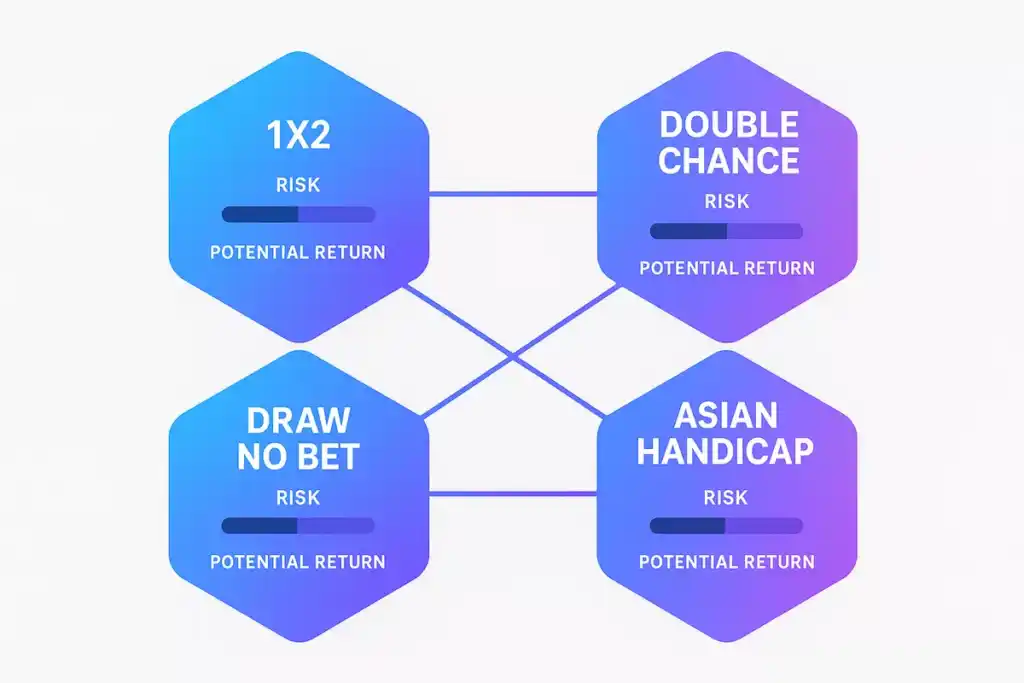
1X2 betting exists alongside several alternative markets that modify risk and reward in different ways. Understanding these comparisons helps you choose the right market for each situation.
1X2 vs Double Chance
1X2 vs Double Chance represents the most common decision point for bettors. Double Chance combines two of the three outcomes into a single bet, increasing your win probability but reducing odds.
The three Double Chance options work like this: 1X covers home win or draw, X2 covers away win or draw, and 12 covers home win or away win (eliminating the draw). You essentially get two chances to win from one bet.
The math behind Double Chance odds simply combines the implied probabilities. If home win is 40% (2.50 odds) and draw is 30% (3.33 odds), then 1X at 70% probability gives you roughly 1.43 odds. The bookmaker margin reduces this slightly in practice.
When to choose Double Chance: backing a moderate favorite against tough opposition where a draw seems plausible, or backing an underdog when you believe they can avoid defeat but aren’t confident in an outright win. The reduced odds (typically 1.30-1.60) mean you need high win rates to profit.
When to choose 1X2: when you have strong conviction about a specific outcome. The higher odds compensate for lower win probability. Over time, consistently finding value in 1X2 markets proves more profitable than the safer but lower-returning Double Chance approach.
Success rate comparison tells the story. Double Chance bets win roughly 65-75% of the time depending on the matchup. 1X2 bets win 33% of the time by definition (one outcome from three). But three winning 1X2 bets at 3.00 odds returns 9 units from 3 units staked. Nine winning Double Chance bets at 1.40 odds returns 12.6 units from 9 units staked. The difference narrows when you account for actual win rates.
1X2 vs Draw No Bet
1X2 vs Draw No Bet creates a different risk profile. Draw No Bet eliminates the draw outcome by refunding your stake if the match finishes level. You only win or lose based on the team result.
This market offers odds between straight 1X2 and Double Chance. If home win is 2.50 and draw is 3.50, Draw No Bet home might be 1.90. You’re giving up some upside for downside protection.
Draw No Bet makes sense when you expect a close match with decent draw probability but you still favor one side slightly. The refund cushion removes the worst-case scenario of being right about the match dynamics but wrong about the specific outcome.
The strategic difference: 1X2 rewards conviction, Draw No Bet rewards being roughly right. If you frequently find yourself backing teams that draw when you expected them to win, Draw No Bet might suit your style better. But it caps your upside significantly.
1X2 vs Asian Handicap
1X2 vs Asian Handicap shifts the entire framework. Asian Handicaps eliminate the draw possibility by applying quarter or half-goal handicaps that create two-way markets. A -0.5 handicap means your team must win outright. A +0.5 handicap means your team only needs to avoid defeat.
The advantage: no draw scenario means 50% chance of winning instead of 33%. The disadvantage: handicaps can create confusing split-outcome scenarios with 0.25 and 0.75 lines.
Asian Handicaps work best for matches with clear favorites where you want action but refuse to take 1.30 odds on a straight win. Apply a -1.5 handicap to that favorite, and suddenly you’re getting 2.50 odds if they win by two or more goals. This converts a value-less favorite bet into a value proposition.
1X2 works better for evenly-matched contests where all three outcomes carry realistic probability. The higher draw odds (often 3.00-3.50) create value opportunities Asian Handicaps don’t offer.
1X2 vs Over/Under Goals
1X2 vs Over/Under Goals represents completely different betting philosophies. Over/Under focuses on total goals regardless of winner. You might believe Liverpool and City will produce a 2-2 draw, making the over 3.5 goals bet valuable even though you have no winner prediction.
These markets complement rather than compete. Some matches suit 1X2 analysis better (defensive matchups where the winner matters but goals will be scarce). Others suit Over/Under better (open, attacking matches where goals flow but the winner feels random).
Combining markets strategically can increase edge. If you believe Liverpool wins 2-0, you can back Liverpool in 1X2 and under 2.5 goals separately. Both bets win if you’re right, neither wins if you’re wrong, but the combined value might exceed betting correct score directly.
| Market Type | Risk Level | Return Potential | Win Probability | Best For |
|---|---|---|---|---|
| 1X2 | High | High | 33% | Conviction plays |
| Double Chance | Low | Low | 65-75% | Risk reduction |
| Draw No Bet | Medium | Medium | 40-50% | Close matches |
| Asian Handicap | Medium-High | Medium-High | 50% | Favorite upgrades |
No single market is objectively best. Match each betting opportunity to the market that maximizes your edge for that specific situation. Sometimes that means 1X2. Sometimes alternatives make more sense.
Best Sports for 1X2 Betting
1X2 betting only makes sense in sports where draws occur with enough frequency to matter but not so often that predicting winners becomes pointless.
Football
Football dominates 1X2 betting globally and for good reason. Draw frequency hovers around 25-30% across most leagues, creating that perfect middle ground. Home teams win roughly 45-50% of matches, away teams 25-30%. Those percentages create interesting dynamics where all three outcomes carry realistic probability.
Premier League draws happen in about 27% of matches. Serie A trends slightly higher at 28-29% due to more defensive tactics. Bundesliga sees fewer draws around 24-25% because German football emphasizes attack. La Liga falls somewhere in the middle. These variations matter when calculating expected value.
Lower leagues produce even more draws. Championship football in England sees draws exceed 30% some seasons. Teams are more evenly matched, financial gaps smaller, tactical differences less pronounced. More draws mean more value in that X option when others ignore it.
International football creates unique 1X2 dynamics. World Cup and European Championship matches often turn cautious, especially in group stages where a draw might suffice for both teams. Draw odds that would be 3.50 in club football might drop to 2.80 for international matches. Adjust your analysis accordingly.
Ice Hockey
Ice hockey works well for 1X2 betting in leagues that allow regular-time draws. European leagues follow this format more than North American leagues. The NHL uses overtime and shootouts, but you can find 1X2 markets that settle on the 60-minute result, ignoring everything afterward.
Hockey draws happen less frequently than football, typically 15-20% of matches depending on league. Lower-scoring nature means games often tip one direction rather than finishing level. This makes draw odds typically 4.00-5.00, which can represent value if you’ve identified a specific matchup likely to stay tight.
Rugby
Rugby sees draws rarely but they exist. Rugby Union produces draws perhaps 3-5% of the time. Rugby League even less. These low frequencies make the draw option almost irrelevant for 1X2 betting. You’re essentially choosing between two outcomes, which makes two-way moneylines more appropriate.
The occasional tight match where a draw seems possible might offer huge draw odds like 12.00 or higher. That can represent value if your analysis suggests draws happen 10-12% in these situations rather than the 8% implied by 12.00 odds. But the sample size for validation remains small.
Handball
Handball produces draws more often than you’d expect for such a high-scoring sport. International handball matches end level perhaps 10-15% of the time, enough to create legitimate 1X2 markets. Draw odds typically sit around 5.00-7.00.
Handball betting remains niche outside Europe, limiting available markets and liquidity. But for bettors who understand the sport, 1X2 opportunities exist without the heavy competition you face in football markets.
Basketball
Basketball in European leagues sometimes offers 1X2 betting on regulation time only. NBA games never end in draws due to overtime rules, making 1X2 impossible. But EuroLeague and domestic European leagues occasionally have draws after 40 minutes before overtime begins.
These draws happen rarely, maybe 5-8% of matches. The high-scoring nature means games usually tip one direction. Draw odds reflect this, often 8.00 or higher. Value exists only in specific scenarios, and the market remains thin.
Sports where 1X2 doesn’t work
Sports where 1X2 doesn’t work include tennis (no draws ever), baseball (extra innings until someone wins), American football (overtime rules), golf (strokeplay format), combat sports (draws are exceedingly rare and usually controversial). Bookmakers don’t offer 1X2 markets for these sports because the format makes no sense.
Trying to force 1X2 thinking onto two-outcome sports creates confusion without benefit. Recognize when straight moneylines or spread betting makes more sense, and use the appropriate market.
The strategic lesson: 1X2 betting thrives where draws occur frequently enough to create three viable outcomes but not so frequently that picking winners becomes lottery-style random. Football hits that sweet spot perfectly. Other sports work in specific contexts. Most sports don’t work at all.
Common Mistakes to Avoid
Even experienced bettors fall into patterns that drain bankrolls slowly enough to miss until damage accumulates.
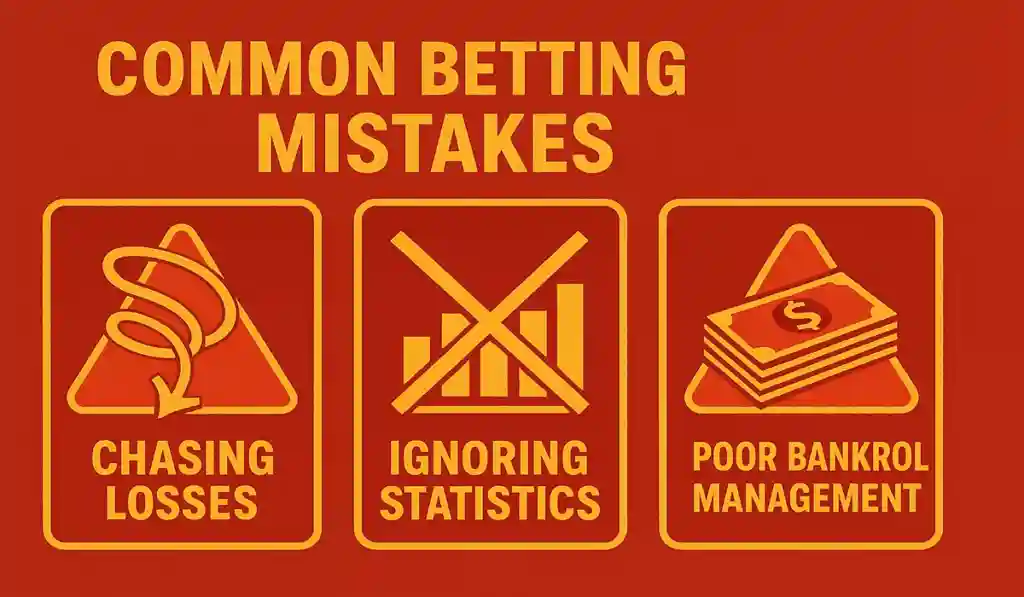
Betting on favorites blindly ranks as the most common error. Those 1.30 odds look safe and comfortable, especially when the favorite dominates their league. But favorites need to win 77% of matches at 1.30 odds just for you to break even. Factor in bookmaker margin, and you need closer to 80% win rate. Few teams maintain that consistency.
The math punishes you silently. Win eight straight bets at 1.30 odds, profit 2.4 units from 8 units staked. Then lose twice, down 2 units. You’re suddenly in the red despite winning 80% of bets. This trap destroys casual bettors who never do the math.
Ignoring home and away form splits costs people constantly. They see a team won four of their last five matches and back them at decent odds, missing that all four wins came at home while they lost every away match in that stretch. Home advantage matters in football more than most sports, typically worth 0.3-0.5 goals in expected value.
Some teams are essentially different squads home versus away. Back them at home confidently, avoid them away completely. Track these splits religiously or watch value evaporate on away day disasters you should have predicted.
Overlooking team news in the 24-48 hours before matches creates costly mistakes. Star striker gets injured in training Friday, bookmaker odds shift immediately Friday evening. But casual bettors placed their bets Thursday night at outdated prices. That injury changes everything about match probability.
Follow official club accounts, check team news sites, monitor lineup leaks. Information edges exist for bettors willing to do basic research. Laziness costs money.
Chasing losses accelerates bankroll death faster than bad handicapping. You lose three bets Tuesday night, suddenly you’re betting Wednesday’s matches at double stakes to recover. That desperation breeds poor decision-making, reduces analytical discipline, and compounds losses.
The professional response to losses: analyze what went wrong if anything, maintain standard stakes, move forward. Losses happen. They’re part of betting. Emotional responses make everything worse.
Not shopping for odds seems minor but accumulates significantly over hundreds of bets. One bookmaker offers Liverpool at 2.50, another offers 2.60. That 0.10 difference equals 4% more profit when you win. Over 100 winning bets, that’s 4 extra units of profit simply from clicking a different website.
Opening accounts at multiple bookmakers takes 30 minutes. Checking odds across sites takes 30 seconds per bet. The return on that minimal time investment reaches double-digit percentage points annually for serious bettors.
Misunderstanding settlement rules creates disputes that are entirely preventable. The match goes to extra time, your team wins there, you expect your 1X2 home win bet to pay. But 1X2 settles on 90-minute results. You lose. Whose fault? Yours, for not reading the rules.
Every bookmaker publishes settlement rules clearly. Read them once when opening your account. Saves arguments and disappointment later.
Overconfidence in draws punishes pattern-seeking bettors. They notice two teams drew last five meetings, get excited about 3.20 draw odds for the next match, bet heavily. That’s not analysis, that’s superstition. Past draws don’t predict future draws without underlying reasons.
Draws are the hardest outcome to predict in 1X2 betting because so many specific scenarios must align. Even score, neither team pulls ahead, game stays tight throughout. Getting all those factors right requires deeper analysis than “these teams always draw.”
Ignoring context makes bets based on incomplete information. Derby matches play differently than regular fixtures. Cup finals create unique pressure. Matches where both teams need wins produce different dynamics than where one team needs a win and the other can accept a draw. Context changes everything.
Track motivational factors: relegation battles, title races, European qualification fights, already-promoted teams coasting. These contexts affect performance in measurable ways that should influence your betting.
Poor bankroll management tops every list of betting mistakes because it magnifies all other errors. Bet too much per play, a few losses wipe out your bankroll before your edge materializes. Bet too little, your winning edge generates such small profits that variance becomes emotionally difficult to handle.
Find the right balance for your bankroll size, risk tolerance, and typical odds range. Then stick to that system through winning and losing streaks.
Pro Tip: Record Everything
Track every bet with date, match, selection, odds, stake, result, and profit/loss. After 100 bets, patterns emerge showing your strengths and weaknesses. Maybe you win backing favorites but lose backing draws. Maybe home teams profit you while away teams drain your bankroll. You can’t fix problems you don’t measure.
1X2 Betting Frequently Asked Questions
Is 1X2 betting better than Double Chance?
Neither market is objectively better. They serve different purposes. 1X2 betting offers higher odds and greater profit potential but requires predicting one specific outcome from three possibilities. Your win rate hovers around 33% even with good analysis. Double Chance reduces risk by covering two outcomes but slashes odds typically to 1.30-1.60 range, requiring 65-75% win rate to profit meaningfully.
Choose 1X2 when you hold strong conviction about a specific outcome and the odds represent value. Choose Double Chance when you want risk reduction in close matches or when building accumulators where minimizing single-bet failure matters. Professional bettors favor 1X2 because sustained value identification trumps risk reduction over large sample sizes.
Can I bet 1X2 on all sports?
No. 1X2 betting only works in sports where draws occur with meaningful frequency. Football dominates the market because 25-30% of matches end level. Ice hockey works in leagues with regular-time draws. Rugby sees occasional draws but rarely enough that 1X2 makes sense. Handball offers some opportunities.
Sports without draw possibilities don’t feature 1X2 markets. NBA basketball plays until someone wins. Tennis never ends in draws. Baseball continues through extra innings. American football uses overtime rules. These sports use two-way moneylines instead. Trying to apply 1X2 thinking to non-draw sports creates confusion without purpose.
What happens to my 1X2 bet if the match goes to extra time?
Your bet settles based on the 90-minute result plus injury time only. Extra time, penalty shootouts, and golden goals don’t count unless explicitly stated otherwise. Match finishes 1-1 after 90 minutes, draw wins your 1X2 bet regardless of what happens afterward. One team wins in extra time, that doesn’t change your draw bet into a loss after it already won.
This settlement rule confuses new bettors constantly but bookmakers clearly state it in their terms. Always check specific rules at your bookmaker because minor variations exist. Some special markets settle on outcomes including extra time, but standard 1X2 markets never do. Understanding this rule prevents the most common betting disputes.
Expertly verified: Amelia Foster