
1X2 Handicap Betting: How to Use It
 Available in US
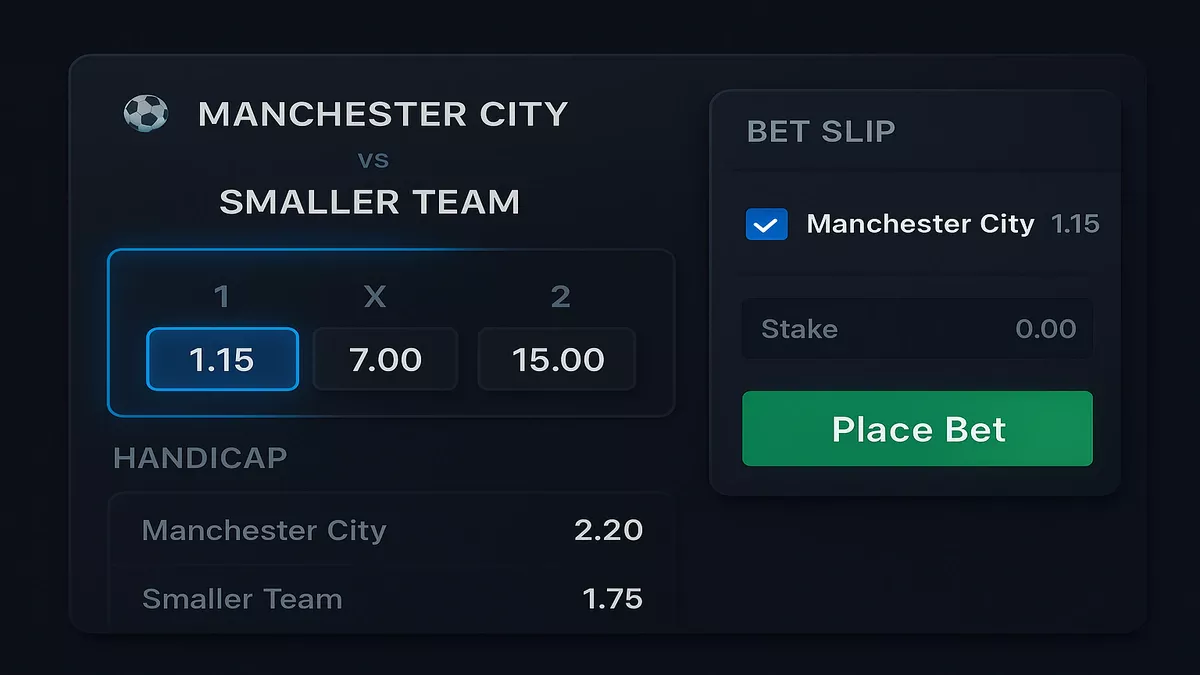
You’re staring at Manchester City versus a newly promoted side. The straight 1X2 odds read 1.15 for City to win. Your analysis screams City dominates this match, but those odds are borderline insulting. Bet $100 to profit $15? That’s not value, that’s just handing money over slowly while hoping nothing weird happens.
This scenario repeats weekly across football leagues worldwide. Quality gaps produce one-sided matches where the favorite should win comfortably, but the odds make backing them pointless. Most bettors either skip these matches entirely or make terrible value bets on heavy favorites at awful prices. Smart bettors use handicap markets to transform those worthless 1.15 odds into genuine value propositions at 2.20 or higher.
Handicap betting isn’t complicated, but it requires understanding how virtual goal advantages and disadvantages change outcome probabilities. Get it right and you’ve unlocked an entire category of profitable betting opportunities that recreational bettors ignore. Get it wrong and you’ll lose bets on teams that actually won the match because you didn’t properly account for the handicap adjustment.
Discover how to bet on shorter intervals with our first half 1×2 betting guide.
- Understanding 1X2 Handicap Mechanics
- When Handicap Betting Makes Sense
- Calculating Handicap Probabilities
- Handicap Market Variations
- 1X2 Handicap vs Asian Handicap
- Live Handicap Betting Strategies
- Common Handicap Betting Mistakes
- Building Profitable Handicap Systems
- Handicap Betting Psychology and Discipline
Understanding 1X2 Handicap Mechanics
The 1X2 handicap market applies virtual goals to one team before kickoff, effectively giving them a head start or forcing them to overcome a deficit. The actual match result gets adjusted by this handicap to determine betting outcomes.
Say Manchester City faces Luton with a -2 handicap on City. You’re betting on the match result after subtracting two goals from City’s actual score. If City wins 3-0 in reality, the handicap makes it 1-0 City for betting purposes. Your City home win bet wins. If City wins 2-0, the handicap creates 0-0, making the draw win. If City wins 1-0, the handicap shows Luton 1-0, so the away win cashes.
The critical detail many bettors miss: you’re not betting on goal margins or spreads. You’re betting on which outcome occurs after applying the handicap adjustment. The 1X2 structure remains home win, draw, or away win. The handicap just shifts what actual results correspond to each betting outcome.
Negative handicaps go on favorites. Manchester City -1 means they start one goal behind and must win by two or more clear goals for home win bets to cash. A one-goal City victory produces a handicap draw. Any other result favors the away side. The negative handicap makes the favorite’s task harder, raising the odds and creating value opportunities.
Positive handicaps go on underdogs. Luton +2 means they start two goals ahead. City must win by three or more for home win bets to succeed. City winning 2-0 becomes 2-2 after the handicap, draw wins. City winning 1-0 becomes 1-2 Luton after handicap, away win cashes. The positive handicap gives underdogs a virtual cushion, changing the probability distribution across all three outcomes.
Handicaps come in whole numbers only for 1X2 markets because you need the draw possibility to exist. A -1.5 handicap eliminates draws by design, converting to Asian Handicap territory rather than 1X2 structure. Stick with -3, -2, -1, +1, +2, +3 handicaps when betting 1X2 format.
The math behind handicap odds involves calculating how often the favorite wins by specific margins based on historical patterns and team strength differentials. City might win overall 75% of the time against Luton, but win by three or more goals only 40% of the time. That 40% probability at 2.50 odds offers vastly better value than the 75% probability at 1.15 odds straight up.
When Handicap Betting Makes Sense
Not every mismatch justifies handicap betting. Specific circumstances create ideal conditions where handicap markets offer genuine value unavailable in straight 1X2.
Cup competitions featuring huge quality gaps present perfect handicap scenarios. Premier League giants hosting League Two opposition in early FA Cup rounds might be 1.08 to win straight, pricing that’s absolutely worthless. Apply a -2 or -3 handicap and suddenly you’re getting 2.20-2.80 odds on outcomes that still happen 45-55% of the time based on quality differential.

The psychological and fitness factors in cup matches matter for handicap outcomes. The bigger club might field rotated lineups initially, only asserting dominance after halftime. Or they take the match seriously from the start, running up scores to build confidence and momentum. Reading team selection news and manager attitudes toward cup competitions helps identify which matches produce comfortable handicap-covering victories.
League matches between top sides and relegation candidates create handicap value when the favorite needs goals for goal difference or confidence. A title-chasing team hosting last place opposition in April might not just win, they’ll actively seek to score multiple goals because goal difference could decide the championship. The -1 or -2 handicap odds don’t fully price in that motivation differential.
Reverse fixtures where the first meeting produced a comfortable scoreline suggest handicap betting potential. Say Liverpool beat Norwich 4-0 away earlier in the season. The return fixture at Anfield might show similar dominance. Historical head-to-head patterns revealing consistent thrashings indicate tactical matchups where one side simply cannot compete, making handicaps worthwhile.
Teams in exceptional form against opponents in crisis create handicap opportunities the market underprices. A side winning their last six matches by an aggregate 18-3 hosting a team winless in eight and conceding 22 goals probably dominates thoroughly. The handicap odds often don’t reflect the sheer momentum and confidence differential driving those form extremes.
The situations where handicap betting fails involve matches where the favorite should win but nothing suggests dominant victory. A mid-table side hosting a slightly weaker mid-table opponent might win 55% of the time at 1.70 odds. But will they win by two or more goals? Probably not frequently enough to make the -1 handicap at 2.80 worthwhile. Quality gaps must be substantial for handicap betting to offer genuine value.
Calculating Handicap Probabilities
Successful handicap betting requires assessing how often teams win by specific margins, not just whether they win at all. Most bettors completely lack this analytical framework, making terrible handicap bets based on vague feelings about dominance.
Start with historical goal differential data for both teams. Calculate how often your favorite wins by one goal, two goals, three or more in matches against similar-quality opposition over the last 20-30 fixtures. These percentages reveal their victory margin tendencies more accurately than gut feelings about “this team crushes weak opponents.”
Say Manchester City playing home against bottom-tier opposition historically shows: 60% win by three or more goals, 25% win by one or two goals, 10% draw, 5% lose. Those percentages tell you exactly how the -2 handicap breaks down. The 60% win by three or more makes the handicap home win. The 25% win by one or two creates handicap draws. The 15% draw or lose actual results produce handicap away wins or draws.
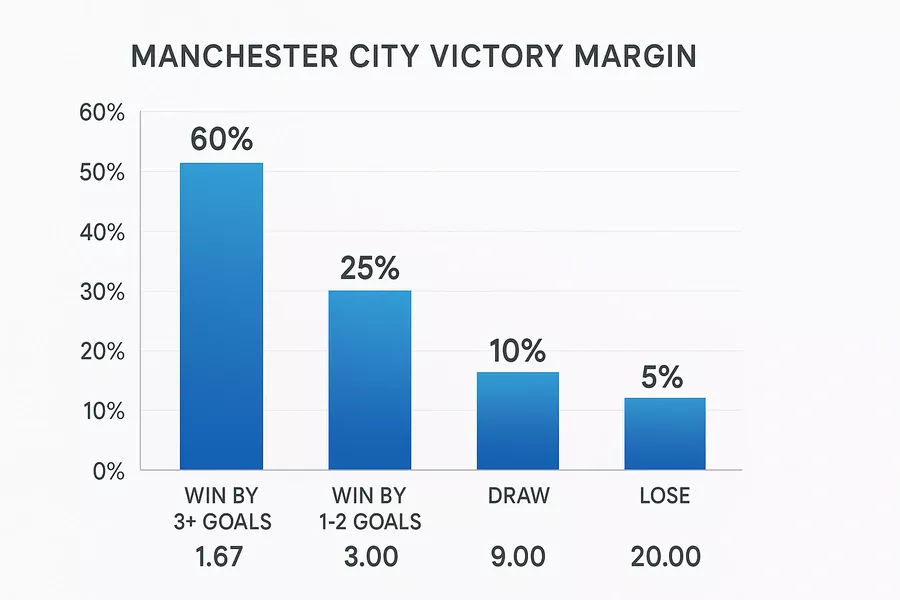
Convert those percentages to fair odds. The 60% probability converts to 1.67 fair odds for the handicap home win. Add bookmaker margin and you’d expect market odds around 1.55-1.60. If the bookmaker offers 2.20, you’ve found massive value because they’ve mispriced the victory margin probability significantly.
Expected goals data specifically for margin of victory provides more sophisticated analysis. Teams with high xG differentials don’t just win, they win big. Manchester City averaging 2.8 xG for and 0.6 xG against in home matches versus bottom-six opposition suggests three-goal victories happen very frequently. The handicap odds should reflect those underlying metrics rather than just overall win probability.
Defensive strength of the underdog matters enormously for handicap calculations. A defensive-minded team might lose most matches but rarely gets thrashed because their tactical approach limits damage. Backing the favorite -2 against organized defensive teams costs money even when the favorite is vastly superior. The underdog’s ability to keep matches within one or two goals makes the handicap draw more likely than odds suggest.
Tactical matchups creating specific dynamics should inform handicap probability assessments. A favorite that dominates possession but struggles breaking down deep defensive blocks might win regularly but rarely by large margins. The -1 handicap becomes risky despite overall quality advantage. Conversely, a favorite with pace exploiting opponents who play high defensive lines might create regular thrashings, making -2 or -3 handicaps valuable.
Handicap Market Variations
Different handicap sizes create distinct probability distributions and strategic considerations. Understanding how each handicap level impacts outcomes helps select the right market for specific matches.
The -1 handicap represents the most common and often most valuable option. It requires the favorite to win by two or more goals, turning what might be 65-70% straight win probability into 45-50% handicap win probability. The odds improve from perhaps 1.40 straight to 2.00 with handicap, creating substantial value increase while maintaining reasonable likelihood.
The -1 handicap particularly suits matches where you expect comfortable victories but not blowouts. Quality favorites hosting decent opposition they should beat but not demolish fit this profile. The two-goal victory margin happens frequently enough to make the odds worthwhile while not being so difficult that variance destroys you.
The -2 handicap demands three-goal victories, occurring far less frequently even in mismatches. Historical data across major leagues shows favorites winning by three or more goals in only 25-35% of matches against bottom-tier opposition depending on league attacking tendencies. The -2 handicap works best for absolute mismatches in cup competitions or league games where motivation and quality gaps align perfectly.
The risk with -2 handicaps involves the favorite winning comfortably 2-0 or 3-1, results that feel like dominance but don’t cover the handicap. You watch City destroy the opponent territorially, winning 2-0 while creating 20 chances. The handicap makes it 0-0, draw wins, and you lose despite being completely right about match quality. This psychological frustration causes many bettors to abandon handicap betting entirely after a few near-misses.
The -3 handicap enters truly rare territory. Even huge favorites against terrible opposition win by four or more goals infrequently, maybe 15-20% of the time in the most lopsided matchups. The odds might reach 3.50-4.50, tempting because of potential returns. But the required four-goal margin happens so rarely that these bets rarely offer genuine value despite attractive odds.
Positive handicaps work inversely for underdog backers. The +1 handicap means the underdog only needs to avoid losing by two or more goals. This outcome occurs perhaps 55-65% of the time depending on the matchup, but the odds might be only 1.40-1.50 because bookmakers know bettors love “safe” underdog bets. The value usually doesn’t exist despite the higher probability.
The +2 handicap requires the favorite to win by three or more for you to lose completely. With underdogs, you win on actual draws or wins, plus you win on favorite victories by one or two goals. This outcome probability reaches 70-75% in many mismatches, but the odds compress to 1.25-1.35. The safety isn’t worth the terrible return unless you’re certain the favorite won’t dominate completely.
1X2 Handicap vs Asian Handicap
Bettors often confuse 1X2 handicap betting with Asian Handicap despite fundamental structural differences. Understanding the distinction helps you choose the right market for specific situations.
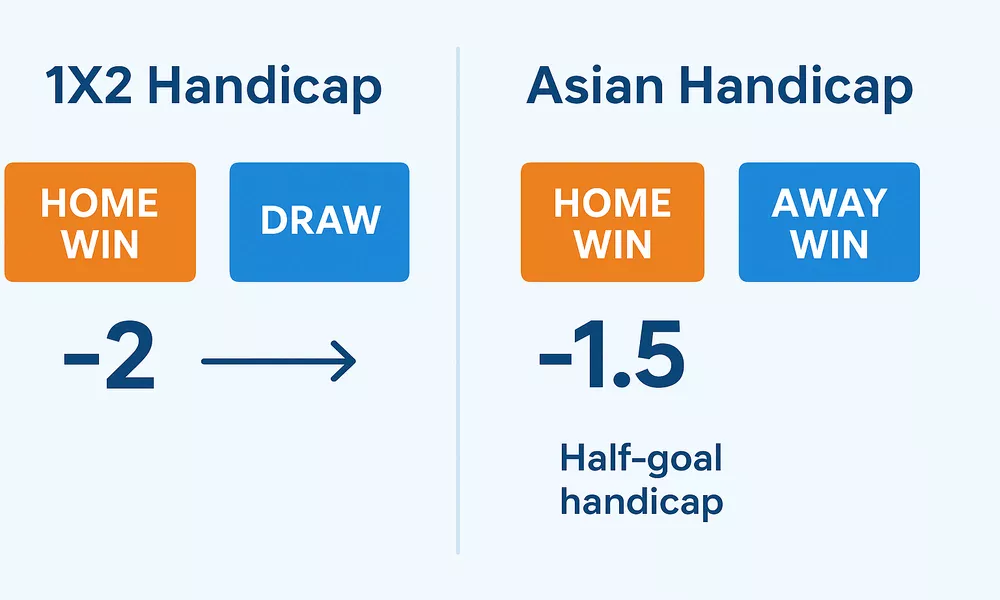
1X2 handicaps maintain the three-outcome structure with home win, draw, and away win all possible after applying the handicap. The draw possibility exists because handicaps use whole numbers only. A -2 handicap produces a draw when the favorite wins by exactly two goals. This three-way structure creates different odds and probabilities than two-way Asian markets.
Asian Handicaps eliminate the draw possibility through half-goal and quarter-goal lines. A -1.5 Asian Handicap requires the favorite to win by two or more goals, period. No draw option exists. A -1.75 Asian Handicap splits your stake between -1.5 and -2.0, creating partial win/loss scenarios. The complexity increases but the lack of draw option changes probability calculations fundamentally.
The strategic choice between formats depends on your analysis. If you believe the favorite wins by exactly the handicap number frequently, 1X2 handicap offers value in the draw outcome. A team that consistently wins 2-0 makes the -2 handicap draw attractive because that exact result happens often. Asian Handicap at -2.0 loses on 2-0 results, making it worse value for that specific pattern.
Conversely, when you’re confident about victory margin but not the exact number of goals, Asian Handicap’s two-way structure offers better odds for clear outcomes. The favorite either covers or doesn’t, no middle ground. The odds on each outcome typically beat the 1X2 handicap equivalent outcomes because you’re eliminating one possibility.
The psychological element favors Asian Handicap for many bettors because losing to the draw feels especially frustrating in 1X2 handicap markets. You watch the favorite dominate, win 2-0, feel completely right about the mismatch, then lose your -2 handicap bet because it ended exactly 0-0 after adjustment. Asian Handicap -1.5 would have won on that same 2-0 result, avoiding the psychological pain.
Bankroll management considerations differ between formats. The three-outcome 1X2 handicap creates more variance through the draw possibility. Your probability of winning sits around 40-50% depending on handicap size. Asian Handicap two-way betting wins roughly 50% of the time by design, creating smoother variance curves over large samples. If you’re managing tight bankrolls, Asian format might suit better despite occasionally worse odds.
Live Handicap Betting Strategies
In-play handicap betting opens opportunities unavailable pre-match as early match dynamics clarify likely final margins.
Early goals dramatically shift handicap probabilities and create value in markets that overreact. The favorite scores in the 8th minute, taking a 1-0 lead. The -1 handicap odds shorten from 2.00 to 1.60 instantly. But has the probability really moved that much? The favorite still needs to score again while preventing any opponent goals. Early leads frequently end 1-0 or get equalized. The market overvalues how much one early goal changes two-goal victory probability.
The reverse scenario also creates value. The underdog scores first against expectations. The favorite’s -1 handicap odds explode from 2.00 to 4.50. But the favorite was always expected to dominate this match. One goal against the run of play doesn’t fundamentally change their quality advantage. They’ll likely equalize and probably still win comfortably. The inflated handicap odds offer value based on temporary score rather than true match quality.
Second half handicap betting isolates the final 45 minutes only, creating different probability distributions. A favorite leading 1-0 at halftime might press for more goals in the second half, particularly if they need goal difference or want to build momentum. The second half -1 handicap asks whether they score two or more in the final 45 minutes, which happens more frequently than full-match -1 when they’re already ahead and chasing additional goals.
Red card situations shift handicap probabilities massively but markets sometimes overshoot. The underdog gets a player sent off at 30 minutes while scores are level. The favorite’s -1 handicap odds crash from 2.00 to 1.30, assuming the numerical advantage guarantees multiple goals. But one-man advantages don’t produce goal avalanches as reliably as expected. The underdog sits deeper, defends compact, frustrates the favorite. The handicap odds overestimate how much the red card helps.
Substitution patterns reveal tactical intentions affecting handicap outcomes. The favorite brings on attacking players at 60 minutes while already leading 1-0, signaling they want more goals. The -1 handicap becomes more likely as they commit numbers forward. Conversely, the favorite brings on defensive players to protect a 1-0 lead, making additional goals less likely. Reading these tactical shifts in-play informs better handicap betting decisions than pre-match analysis alone.
Common Handicap Betting Mistakes
Even experienced bettors make systematic errors when approaching handicap markets that cost them money unnecessarily.
Blindly backing favorites with handicaps because straight odds are “too low” represents the most common mistake. The 1.15 odds on the straight win aren’t attractive, so bettors add -1 or -2 handicaps to get 2.00+ odds without properly calculating whether the favorite actually wins by those margins frequently enough. You’re not creating value, you’re just adding difficulty to make bad odds feel better.
The value question must always be: does my analysis suggest the handicap outcome happens more often than the odds imply? If not, the bet offers no value regardless of how much better the odds feel compared to straight win prices.
Ignoring the underdog’s defensive organization costs handicap bettors consistently. Some weak teams rarely win but also rarely get thrashed because they defend compactly and prioritize limiting damage over attacking. The favorite might win 70% against such opponents but only by two or more goals 30% of the time. The -1 handicap doesn’t offer value despite the obvious quality gap.
Conversely, other weak teams play openly, attacking naively and leaving spaces that superior sides exploit brutally. These teams lose often and lose big, making handicap backing on favorites against them valuable. Distinguishing between these underdog types separates profitable handicap betting from expensive lessons in variance.
Chasing handicap draws after watching the favorite win by exactly the handicap number proves costly. You back -2 handicap, the favorite wins 2-0, the draw hits at 3.60 odds. Next similar matchup, you bet the handicap draw thinking “it happened last time.” But that 2-0 result was one specific scoreline among many possibilities. The draw won’t repeat reliably enough to make it profitable long-term. Don’t results-orient based on dramatic recent outcomes.
Betting handicaps on matches where you haven’t properly analyzed victory margin tendencies guarantees losses. You can’t just apply handicaps randomly to any mismatch expecting value to appear. You need historical data, tactical understanding, and motivation assessment to determine whether the favorite actually produces the required goal margins frequently enough. Lazy analysis applied to complex markets loses money faster than in straight markets.
Overestimating how often huge handicaps like -3 or -4 cash creates expensive longshot chasing. Those 4.50 odds look tempting, and occasionally a favorite really does win 5-0. But the required four or five-goal margins occur so rarely that even in huge mismatches, the probability doesn’t justify the action. The odds aren’t value, they accurately reflect the rarity of complete demolitions.
Building Profitable Handicap Systems
Systematic approaches to handicap betting remove emotional reactions and ensure you’re consistently identifying genuine value rather than exciting-looking bets.
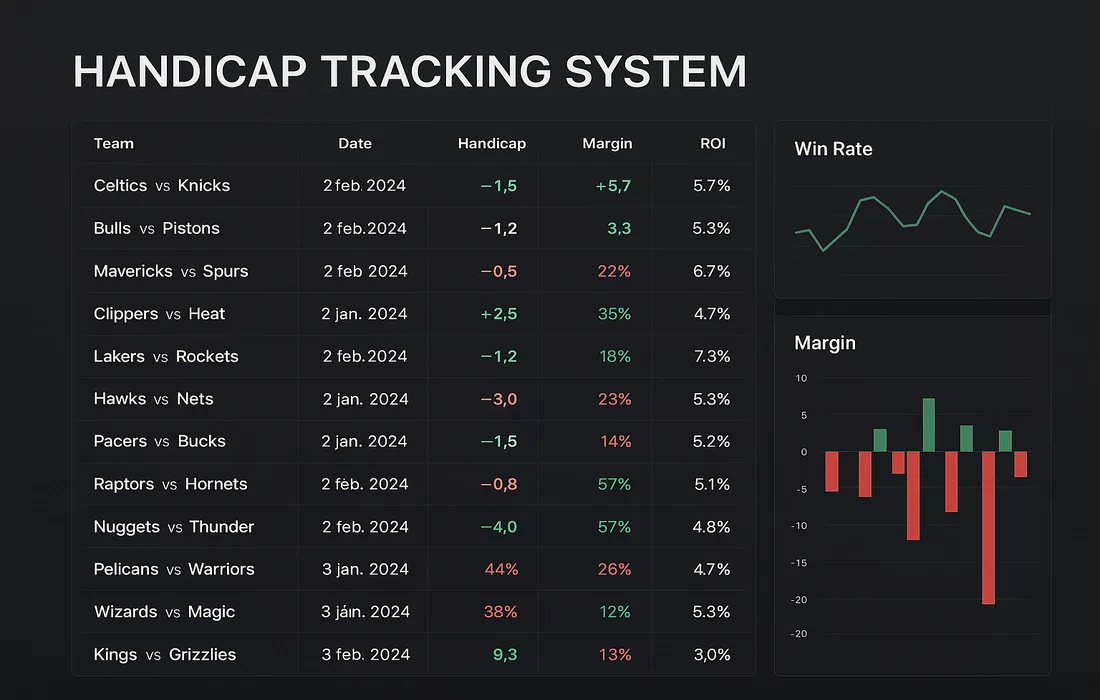
Create a database tracking victory margins for teams you bet on regularly. Record not just whether they won but by how many goals in each match over the last 30+ games. Segment this data by home/away, opponent quality, and competition type. These patterns reveal which teams reliably produce handicap-covering victories versus teams that win narrow margins.
After tracking 30 matches for Manchester City, you might discover they win by two or more goals 65% of the time at home against bottom-half opposition. That data informs -1 handicap betting decisions far better than vague impressions about “City usually dominates.” The numbers either support the handicap odds or they don’t. Trust the data over feelings.
Develop minimum probability thresholds before placing handicap bets. Perhaps you require 50% probability minimum for -1 handicaps to justify the typical 2.00-2.20 odds. Calculate your assessed probability based on historical victory margin data, only betting when you exceed your threshold. This discipline prevents marginal bets where thin edges don’t justify the variance.
Build league-specific profiles recognizing that attacking tendencies vary dramatically across competitions. The Bundesliga produces higher-scoring matches and larger victory margins than Serie A’s defensive football. A -1 handicap in Germany might cash 48% of the time while the same matchup quality in Italy cashes only 38%. Adjust your handicap strategies to league-specific statistical realities.
Track your performance separately by handicap size. Calculate win rate and ROI independently for -1, -2, and -3 handicaps over 100+ bets each. You might discover you profit heavily on -1 handicaps, break even on -2, and lose consistently on -3. That information tells you exactly which handicap sizes offer you genuine edges and which to avoid regardless of how attractive the odds appear.
Consider bankroll management adjustments for handicap betting versus straight markets. The increased variance from requiring specific victory margins might warrant smaller unit sizes, perhaps 0.75-1.0 units versus your standard 1.0-1.5 units for straight bets. The more volatile outcome distribution demands more conservative staking to survive inevitable losing runs.
Handicap Betting Psychology and Discipline
The emotional challenges of handicap betting differ from straight betting, requiring adjusted mental approaches to maintain discipline through variance.
Losing handicap bets when the favorite wins comfortably creates unique frustration straight betting doesn’t. You watch City dominate, winning 2-0 while creating 15 chances, completely validating your analysis about their superiority. Then the -2 handicap settles as a draw and you lose money despite being fundamentally correct about match quality. This psychological disconnect between being right and losing money causes many bettors to abandon handicap betting prematurely.
The solution involves properly framing what you’re betting on. You’re not betting “City dominates” or “City should win comfortably.” You’re betting specifically “City wins by three or more goals,” which is a much narrower outcome than general dominance. Accept that dominance doesn’t always convert to the specific margins you need. Losses on comfortable victories are just variance within a properly identified value bet.
The temptation to chase after near-misses proves especially strong with handicaps. The favorite wins 2-0 when you needed 3-0 for the -2 handicap. Next time you face similar matchup, you think “they’ll definitely score three this time” without reassessing whether the probabilities actually support it. Near-misses feel closer to winning than random losses, triggering chase behavior. Resist this by treating every bet as independent regardless of recent results.
Celebrating handicap wins requires perspective about luck versus skill. The favorite wins 5-1, crushing your -2 handicap with ease. You feel genius for identifying the value. But did they really win by four goals because of your brilliant analysis, or did they get lucky with finishing efficiency that day? Wins prove nothing about process quality just as losses don’t invalidate good process. Focus on whether your probability assessments and value identifications were sound, not whether individual bets won.
Building psychological resilience for handicap betting’s variance requires accepting that you’ll lose many bets that “should have won” based on match flow. The variance is higher than straight betting by design. Your edge exists across hundreds of bets, not dozens. If you can’t stomach regular frustrating losses on dominant performances that fell one goal short, handicap betting isn’t worth the emotional cost regardless of mathematical edge.
Master the sports markets from our main dashboard.
Expertly verified: Amelia Foster